Optimizing Complex Well Operations with Innovative OSP Solutions
When it comes to successful well completions in the oil and gas industry, especially in regions as geologically diverse as US-Land (Eagleford, Permian, Haynesville, Marcellus, and others), using the right tools for complex wells can make all the difference. Optimal completions not only ensure efficient production but also help operators manage cost and reduce downtime. In this article, we will focus on Oilfield Service Professionals (OSP) and their innovative tools—such as the ToePro™ Initiation Valve and FracPro™ Frac Plugs—that are redefining completion operations for complex wells.

OSP’s products are gaining traction internationally due to their robust design and operational efficiency. Let’s explore how these specialized tools are making a substantial impact in completions across a variety of challenging geological settings.


The Challenges of Complex Well Completions


As well depths increase and subsurface conditions become more challenging, operators face a range of difficulties during the completion phase. Complex wells, especially those with unconventional or extended-reach laterals, require specialized tools to manage high pressures, variable flow rates, and extreme temperatures.

In the various US-Land regions, wells are often characterized by unpredictable conditions, tight reservoir formations, and corrosive environments. In these cases, standard completion tools may fall short, underscoring the need for advanced solutions like those offered by OSP. The right completion tools can optimize hydraulic fracturing, improve wellbore integrity, and facilitate precise stage isolation.


Introducing OSP’s ToePro™ Initiation Valve


One of OSP’s premier tools for complex completions is the ToePro™ Initiation Valve. Designed for reliable and efficient initiation in high-stress well environments, the ToePro™ valve is engineered to activate flawlessly under intense conditions, making it ideal for complex completions.


Features and Benefits of the ToePro™ Initiation Valve

Pressure-Activated Mechanism

○      The ToePro™ valve utilizes a pressure-activated system, providing consistent initiation when a specified pressure threshold is met. This feature enables precise control during the initial stages of a well’s life, making it particularly valuable for deep wells with extended laterals.

Robust Sealing and Durability

○      Constructed with corrosion-resistant alloys, the ToePro™ valve ensures long-term integrity in harsh environments, including high salinity or high-pressure fields like those commonly encountered in the Permian and Eagleford Basins.

Efficiency in Complex Wells

○      In multistage fracturing operations, the ToePro™ valve simplifies the initiation process, reducing the time and cost required for setting up initial stages. This efficiency is essential for operators in high-cost regions.

Environmental Compatibility

○      With a focus on reducing waste and operational risk, the ToePro™ valve meets environmental standards across the U.S. and international markets, supporting sustainable completions in sensitive areas.

Applications of the ToePro™ in the Field


The ToePro™ valve has been successfully deployed in various basins known for challenging conditions, delivering reliable performance and adding significant value to completion operations. Operators across these land regions have reported higher productivity rates and fewer mechanical issues after switching to the ToePro™ for their completions, highlighting the tool’s robustness and precision.


OSP’s Advanced FracPro™ Frac Plugs: Setting New Standards for Isolation


In addition to the ToePro™ Initiation Valve, OSP’s FracPro™ Frac Plugs are also playing a critical role in multistage fracturing operations. Designed to provide reliable stage isolation, these plugs can handle the high pressures and abrasive environments typical of hydraulic fracturing.


Key Advantages of OSP’s FracPro™ Frac Plugs

High-Pressure Tolerance

○      FracPro™ Frac Plugs are engineered to withstand high pressures, ensuring secure stage isolation even in challenging geological formations like those in Permian and surrounding US-Land basins.

Compact and Efficient Design

○      The compact design of FracPro™ Frac Plugs minimizes the time required for installation and retrieval, which is especially beneficial in complex well architectures with multiple stages.

Easy Drill-Out and Minimal Residue

○      Designed with drill-out efficiency in mind, FracPro™ Frac Plugs reduce debris, minimizing risks of wellbore clogging and facilitating smoother production flow. This feature is especially valuable for operators aiming to reduce post-fracturing cleanup costs.

Eco-Friendly Composition

○      Built with environmentally friendly materials, these plugs meet stringent environmental regulations, aligning with sustainability goals for operations in sensitive regions.


Performance in Real-World Conditions

OSP’s FracPro™ Frac Plugs have been tested and proven in diverse environments, delivering consistent performance in high-pressure, high-temperature conditions. In formations where conventional plugs often fail due to rapid wear, FracPro™ Frac Plugs maintain integrity, allowing for effective stage isolation and smoother transitions between stages.


Why Choosing the Right Completion Tools Matters


Selecting tools specifically designed for complex wells is essential for achieving successful completions. Inadequate tools can lead to costly delays, well integrity issues, and even production shutdowns. By investing in reliable, high-performance tools like the ToePro™ Initiation Valve and FracPro™ Frac Plugs from OSP, operators can:


Optimize Hydraulic Fracturing Efficiency

With tools that precisely control each fracturing stage, operators can increase the rate of production and overall well productivity.

Enhance Wellbore Integrity

By using durable and corrosion-resistant materials, OSP tools minimize the risk of equipment failure, ensuring that the well remains stable throughout its productive life.

Reduce Operational Costs

 Tools designed for efficiency reduce the time and resources needed for completions, translating to significant savings, especially in high-cost regions.

Meet Environmental Standards

OSP’s commitment to environmentally friendly design means that operators can achieve compliance with local and international environmental regulations, supporting sustainable development goals.


A Look at Regional Applications: Texas, Northern Louisiana, Pennsylvania, and Beyond


In markets like US-Land, where geological challenges and environmental scrutiny are high, OSP’s tools are particularly well-suited for effective and compliant operations.


Texas: In Texas, known for its mature and complex well formations, OSP’s tools provide solutions that address wellbore integrity, making it easier to manage wells with high depletion rates.

Northern Louisiana: Operators in Northern Louisiana often encounter challenging reservoirs with tight formations. The ToePro™ valve and frac plugs are designed to optimize hydraulic fracturing in these formations, enhancing recovery and production rates.

International Markets: As demand for reliable completion tools grows, OSP’s products are also gaining attention internationally, where operators require dependable, high-performance tools for complex wells in diverse environmental conditions.


FAQs About OSP’s Completion Tools for Complex  Wells


What is the main function of the ToePro™ Initiation Valve?
The ToePro™ valve initiates hydraulic fracturing by opening at a precise pressure, allowing operators to control and optimize the first stage of the well.


How do OSP’s FracPro™ Frac Plugs contribute to sustainable completions?
FracPro™ Frac Plugs are made with eco-friendly materials, designed to minimize residue during drill-out, reducing environmental impact and enhancing operational efficiency.


Are OSP’s tools suitable for high-pressure, high-temperature wells?
Yes, both the ToePro™ Initiation Valve and FracPro™ Frac Plugs are engineered for extreme conditions, providing reliability in high-pressure, high-temperature environments.


How do OSP tools improve well productivity?
By optimizing each stage of the completion, these tools enhance hydraulic fracturing efficiency, ultimately improving production rates and well longevity.


Can these tools be used in unconventional wells?
Absolutely, OSP’s tools are designed to handle the unique challenges of unconventional and extended-reach wells, making them suitable for a wide range of formations.


By leveraging advanced tools like the ToePro™ Initiation Valve and FracPro™ Frac Plugs, Oilfield Service Professionals (OSP) are setting a new standard in completion efficiency, reliability, and environmental compliance. These tools are empowering operators in multiple US-Land Basins and International Regions to achieve completions done right, with minimized risk and maximized production potential.


By proadAccountId-464721 November 13, 2025
In today’s oil and gas industry, the stakes are higher than ever. Deepwater projects in regions like the Lower Tertiary Gulf of America are pushing operational limits. High-pressure, high-temperature (HPHT) environments test every piece of downhole equipment, and when traditional barrier systems fail, the results are costly: delayed completions, compromised zonal isolation, sidetracks, and increased non-productive time (NPT).  Oilfield Service Professionals (OSP) set out to solve these challenges head-on. The result is a modular suite of drillable technologies; BarrierPro™, SqueezePro™, and MultiPro™ , purpose-built for extreme HPHT conditions. Backed by field-proven case studies, these systems are redefining what operators can expect from downhole barrier tools. The Problem: When Conventional Barriers Aren’t Enough Operators working in HPHT wells are all too familiar with the shortcomings of conventional drillable systems. Traditional tools struggle with: Casing ID transitions in Tieback Receptacles (TBR), often causing poor sealing or premature setting. Limited adaptability , forcing operators to carry multiple inventories of specialized tools. Reliability gaps in ultra-deepwater conditions, where small failures translate into massive costs. These limitations have a real impact. Every hour of rig time in deepwater costs tens to hundreds of thousands of dollars. Unreliable barriers mean contingency plans, wasted trips, and, in worst cases, compromised well integrity. The Solution: A Modular Suite of High-Performance Drillable Systems The OSP Drillable Technology Suite is built around three core products, each engineered to solve a specific set of downhole challenges while working seamlessly together. BarrierPro™: The Workhorse for HPHT Integrity BarrierPro™ is a cast-iron retainer/bridge plug rated to API 11D1-V3 standards, capable of handling 15,000 psi differential pressure . Unlike conventional tools that rely on composite bands or segmented slips, BarrierPro™ uses an enhanced slip-retention system that delivers reliable anchoring and sealing in extreme conditions. Key benefits: Superior reliability in casing transitions and TBR environments. Proven performance in record-setting HPHT deployments. Flexible deployment with MultiPro™ hydraulic, mechanical, or wireline systems. [Learn More] SqueezePro™: Faster, Cleaner Cement Assurance For cement remediation and zonal isolation, SqueezePro™ offers both semi and fully composite options. Its design balances high sealing integrity with easier drill-out, helping operators save time and reduce risk. Key benefits: Faster drill-out without sacrificing performance. Reliable isolation for micro-annulus remediation. Streamlined cementing assurance in challenging geometries. [Learn More] MultiPro™: Deployment Made Simple MultiPro™ is the suite’s “enabler”, a modular, field-convertible setting system compatible with multiple deployment methods. Its reduced tool OD and length improve annular clearance and drill-out efficiency, making it highly versatile in complex wellbores. Key benefits: Simplifies inventory with one system adaptable across casing sizes. Field-convertible design reduces downtime during unexpected changes. Compatible with mechanical, hydraulic, and wireline operations. Together, these technologies give operators a reliable, flexible toolkit for deepwater and HPHT challenges. Proof in the Field: Case Studies from the Gulf of America Case Study 1: Remediating a 31,000-ft Micro-Annulus with SqueezePro™ A Gulf of America operator faced severe micro-annulus issues at more than 31,000 ft in a 15,000 psi-rated well. Traditional solutions failed to achieve isolation across complex TBR transitions. Challenge: Deploy a 9-7/8” mechanical barrier in extreme depth and pressure conditions. Solution: OSP deployed SqueezePro™ with a custom centralizer, ensuring smooth placement and reduced friction. Result: The barrier passed API 11D1-V3 pressure validation at 15,000 psi. NPT was significantly reduced, and cement remediation was completed in a single trip. This application demonstrated not only technical success but also operational efficiency - critical in ultra-deepwater projects where rig time equals millions of dollars. Case Study 2: Record-Setting 34,000-ft Barrier Installation with BarrierPro™ In another Gulf of America project, an operator attempted a 34,000-ft barrier installation. Competing systems repeatedly failed due to more than 850 premium casing connections , a notoriously challenging environment for conventional barriers. Challenge: Deliver a barrier capable of setting reliably at record depth with zero tolerance for failure. Solution: OSP deployed BarrierPro™ Hydra-Set™ combined with the CleanPro™ scraper , allowing single-trip scraping and barrier deployment. Result: The first-ever successful barrier installation at 34,000 ft. No seal or setting failures occurred, and the system passed pressure tests exceeding 10,000 psi. The successful operation set a new benchmark for ultra-deepwater completions, giving operators confidence in pushing the limits of HPHT drilling. The Value Proposition for Operators The value of OSP’s technology goes beyond the technical specs. Here’s what it means in practice: Reduced Non-Productive Time (NPT): Single-trip deployment and faster drill-out translating into measurable cost savings. Inventory Simplification: A modular, field-convertible system reduces the need for multiple SKUs and contingency tools. Operational Efficiency: Compatible with multiple casing sizes and deployment methods, enabling quicker decision-making and adaptability. Proven Reliability: Field-proven in the harshest HPHT wells, minimizing the risk of costly sidetracks or failed isolation. Rapid Response: OSP’s modular design allows rig-side adaptability, reducing downtime in case of unexpected failures. For operators, these benefits improve well economics and reduce risk exposure. In today’s market, where margins are tight and project complexity is rising, that’s a powerful advantage. Looking Ahead: Expanding the Boundaries of HPHT Technology The OSP Drillable Technology Suite represents a step-change in HPHT wellbore integrity. But the journey doesn’t stop here. Future development will focus on: Optimizing centralizer systems for even more complex geometries. Expanding long-term performance testing under sustained HPHT conditions. Extending field trials into other deepwater basins worldwide. By driving continuous innovation, OSP empowers operators to transform the toughest drilling challenges into opportunities executed with confidence, safety, and efficiency. Conclusion Deepwater HPHT environments demand technologies that don’t just “get the job done,” but excel under the harshest conditions. The BarrierPro™, SqueezePro™, and MultiPro™ suite from OSP delivers just that: a reliable, modular, and field-proven solution to the challenges of zonal isolation and wellbore integrity. From a 31,000-ft micro-annulus remediation to a record-breaking 34,000-ft barrier installation, these systems have already proven where others failed. For operators, the value is clear; lower risk, higher efficiency, and confidence in tackling the industry’s toughest wells. As projects continue to push deeper, hotter, and more complex, OSP’s drillable technology suite is positioned to set the new standard for wellbore barriers in HPHT drilling.
By proadAccountId-464721 November 13, 2025
When Downtime Becomes the Real Enemy In deepwater drilling, operators often talk about pressure, temperature, and depth as the ultimate tests of a well. But ask any drilling manager where the real pain lies, and you’ll often hear a different answer: non-productive time (NPT). Every hour of rig time offshore costs tens to hundreds of thousands of dollars. When conventional drillable barrier systems fail to hold under high-pressure, high-temperature (HPHT) conditions, the price is steep: sidetracks, delayed completions, and strained budgets. This is the problem Oilfield Service Professionals (OSP) set out to solve. The result is a suite of modular, field-proven tools BarrierPro™, SqueezePro™, and MultiPro™ engineered specifically for HPHT environments. By addressing the core limitations of traditional systems, OSP is helping operators reclaim efficiency, reduce risk, and protect margins. The Pain Points of Conventional Systems Operators drilling into the Lower Tertiary Gulf of America (GoA) or similar HPHT environments face a consistent set of challenges: • Unreliable conveyance through Tieback Receptacles (TBR): Conventional plugs often struggle to pass-through casing ID transitions, leading to poor isolation. • Limited adaptability: Most systems are designed for narrow use cases, forcing operators to carry large inventories of specialized BHAs. • High drill-out times: Ferrous-heavy designs increase flat time during plug removal. • Premature setting risks: Complex geometries can trigger failures before plugs reach depth. The operational consequences are significant: costly contingency sidetracks, delayed production, and increased HSE exposure. The Solution: A Modular, Field-Tested Suite BarrierPro™ – Reliability at Depth BarrierPro™ is a cast-iron retainer/bridge plug rated to API 11D1-V3 for 15,000 psi differential pressure. Its enhanced slip-retention system eliminates the need for composite bands or slotted segments, enabling superior anchoring and performance in HPHT wells. Key benefits: • Dependable sealing in complex high pressure environments • Reliable conveyance through TBR transitions. • Qualified barrier at 15,000 psi differential. • Seamless integration with OSP’s MultiPro™ setting platform. SqueezePro™ – Cement Assurance Simplified For cement remediation and annulus repair, SqueezePro™ offers semi- and fully-composite designs that deliver sealing integrity while dramatically reducing drill-out times. Key benefits: • Rapid drill-out, reducing rig time. • Reliable isolation for cementing operations. • Seamless integration with OSP’s MultiPro™ setting platform. MultiPro™ – Deployment Versatility The MultiPro™ system is a field-convertible setting platform. Compatible with mechanical, hydraulic, and wireline deployment, it reduces tool OD and length for easier clearance through tight geometries. Key benefits: • One system adaptable across casing sizes and grades. • Inventory simplification. • Improved annular clearance and faster drill-out efficiency. Case Study 1: 31,000-ft Micro-Annulus Remediation An operator in the Gulf of America faced severe micro-annulus issues in a 15,000 psi-rated well at 31,000 ft. Traditional tools had repeatedly failed to seal across TBR transitions. OSP solution: • Deployed BarrierPro™ with custom centralizer to ensure smooth passage through restrictions. • Achieved a successful set at 31,000+ ft. • Barrier passed API 11D1-V3 validation testing. Results: • Single-trip remediation completed successfully. • NPT reduced significantly. • Well integrity restored without sidetrack. Case Study 2: Record-Setting 34,000-ft Barrier Installation In another GoA project, an operator attempted to install a barrier at 34,000 ft—a record-setting depth with more than 850 premium casing connections. Competing tools had failed repeatedly. OSP solution: • Deployed BarrierPro™ Hydra-Set™ with CleanPro™ scraper. • Combined scraper and barrier deployment in a single trip. Results: • First successful barrier set at 34,000 ft. • Post-installation test exceeded 10,000 psi. • No seal or setting failures. • Operator avoided contingency sidetrack and costly delays. The Value Delivered The OSP Drillable Technology Suite provides measurable operator benefits: • Reduced NPT: Faster deployment and drill-out save rig time. • Risk Mitigation: Reliable sealing reduces likelihood of remedial work. • Inventory Simplification: Modular system lowers logistical burden. • Operational Flexibility: Multiple deployment options accommodate unpredictable downhole environments. • Proven Reliability: Field data validates performance in the most extreme HPHT wells. Turning Downtime into Uptime The industry can’t afford the inefficiencies of legacy barrier systems. With field-proven tools like BarrierPro™, SqueezePro™, and MultiPro™, OSP delivers what operators need most: reliable performance in the harshest environments, fewer unplanned trips, and measurable reductions in NPT.  In short, OSP is transforming downtime into uptime, protecting both well integrity and operator economics in HPHT drilling.
By proadAccountId-464721 August 21, 2025
Precision at Depth: How OSP’s Downhole Intervention Systems Elevate Well Integrity and Efficiency When challenges arise deep in the wellbore—whether it's regaining control, sealing compromised zones, or preparing for abandonment—operators need tools that are both durable and adaptable. Since 2018, Oilfield Service Professionals (OSP) has been delivering just that, offering a comprehensive suite of downhole intervention systems engineered for performance, safety, and operational efficiency. Comprehensive product breadth : from the head to the shoe and all associated equipment OSP’s intervention tool range is both broad and sophisticated, designed to address diverse downhole needs: NEXUS™ Service Packers – effective for establishing reliabl e isolation across problematic zones. Retrievable Bridge Plugs – for te mporary barriers with cost-saving retrievable designs. MultiPro™ Mechanical, Hydraulic & Wireline Setting Tools – versatile tools that set bridge plugs, cement retainers, and packers via work string, wireline, or coil tubing, simplifying equipment needs and reducing rig-site complexity. SqueezePro™ Composite Cement Retainers / Bridge Plugs and BarrierPro™ Cast Iron and Large-Bore Hydra-Set™ Bridge Plugs – engineered for robu st, qualified short to long-term barrier systems and remedial cementing applications. CleanPro™ Wellbore Cleanout Tools & Accessories – for prepping the wellbore for intervention, improving downhole components are clean, and delivering a clear path for unrestricted success. Thru-Tubing Solutions – designed for efficient deployment of intervention tools in live or constrained wells. Integrated Solutions that Deliver Results OSP’s tools are more than stand-alone products—they’re part of integrated systems designed to: Maintain well integrity during remediation and abandonment Minimize trips , saving time and cost Adapt to changing downhole conditions with modular, multifunction capabilities. A notable example: in the Gulf of America, OSP deployed its integrated downhole intervention systems to boost well integrity while significantly reducing operational costs and reducing the number of required trips. Operational Excellence and Safety at the Core OSP’s success is rooted in its unshakeable core values: quality, integrity, innovation, value, and safety . Smart monitoring systems enhance their tool string deployments—providing real‑time data on downhole parameters like annular pressure, flow rate, and temperature. This live feedback enables early risk detection and safer, more controlled intervention operations. Why Choose OSP for Downhole Interventions? Benefit What It Means for You Comprehensive tool suite Covers everything from packers and plugs to cleanout access—a one-stop solution. Multi-mode tools like MultiPro™ Simplifies logistics and reduces rig complexity—one tool for multiple applications. Proven cost-efficiency Offshore deployment cuts trip times and reduces operating costs significantly. Enhanced safety via real-time monitoring Live tool and well data improve reaction time and operational control. Conclusion When it comes to downhole intervention, OSP doesn’t just provide tools—they deliver integrated, smart solutions built on innovation, safety, and performance. Whether you're tackling zonal remediation, well abandonment, or cleanup operations, OSP is the partner that delivers results—efficiently, safely, and reliably. Talk to a PRO at OSP today and discover how their downhole intervention systems can elevate your operations from depth to delivery.
By proadAccountId-464721 August 21, 2025
Seamless 4-1/2″ Liner Installation Delivers Integrity and Efficiency in Challenging Conditions
By proadAccountId-464721 July 14, 2025
Offshore Drilling Ships: Powering Deepwater Exploration with Support from OSP Technologies
By proadAccountId-464721 May 24, 2025
Wellbore Intervention Tools: Reducing Downtime and Increasing Efficiency
By proadAccountId-464721 May 12, 2025
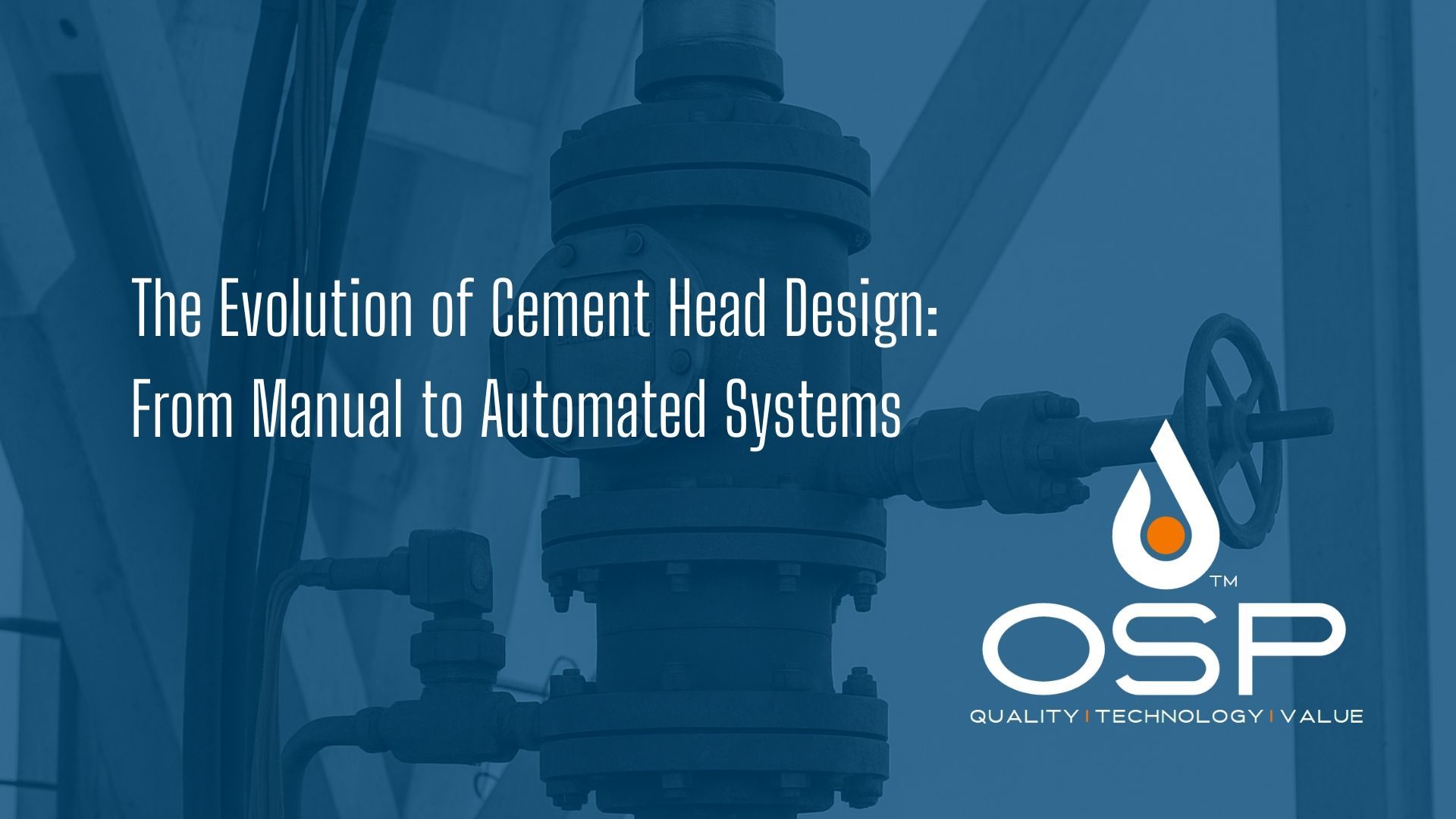
The Evolution of Cement Head Design: From Manual to Automated Systems A historical perspective on how tools like the LaunchPro™ Cement Head have revolutionized cementing operations Cementing is a foundational step in well construction, ensuring zonal isolation, casing protection, and long-term wellbore integrity. One critical component in this process—the cement head—has undergone dramatic transformation over the years. From simple manual designs to today’s automated, programmable systems, the evolution of cement heads reflects broader advancements in oilfield efficiency, safety, and digital integration. Manual Cement Heads: Origins of a Critical Tool Early cement heads were straightforward mechanical devices designed to hold and release plugs during primary cementing operations. These tools required manual operation, often demanding rig personnel to climb to elevated rig components to initiate plug launches. In high-pressure situations, this approach introduced significant safety hazards. Additionally, without real-time feedback or automation, the timing of plug launches relied heavily on operator judgment. This often led to misfires, poor mud displacement, or incomplete cement coverage—issues that could result in costly remedial work and compromised wellbore stability. Hydraulic Cement Heads: Enhancing Safety and Consistency The introduction of hydraulic cement heads marked a substantial improvement in safety and control. By enabling plug releases from the rig floor using pressurized hydraulic systems, these tools significantly reduced the need for personnel exposure to elevated or high-risk areas. Hydraulic systems also allowed for more precise sequencing of plug deployment. However, they presented new challenges, including potential leaks, the need for careful hose management, and maintenance-intensive components. They were also limited in their ability to provide feedback or diagnostics during live operations. Automation and Digital Integration: The Modern Cement Head Today’s cementing operations demand precision, reliability, and real-time control. Automated cement heads represent the current state of the art in this evolution. These systems are integrated with digital controls and telemetry, offering features like remote plug launching, valve actuation, and continuous performance monitoring. The LaunchPro™ Cement Head exemplifies this new generation of technology. Designed to support remote operation and intelligent sequencing, LaunchPro™ enables operators to initiate plug launches and valve operations from a centralized control unit or rig data van. Built-in sensors confirm every action, providing real-time verification and eliminating guesswork. Additional features such as programmable logic controllers (PLCs), internal pressure and temperature monitoring, and configurable sequencing allow for seamless integration with rig automation systems. These capabilities improve operational efficiency, reduce non-productive time (NPT), and elevate cementing precision—particularly valuable in complex environments like HPHT wells, extended-reach horizontals, or offshore platforms. Strategic Advantages and Industry Impact Automated cement heads provide substantial advantages in health, safety, and environmental (HSE) compliance. By minimizing human involvement in high-risk tasks, these tools reduce the likelihood of incidents while also streamlining the rig crew’s workload. Operational consistency improves cement bond quality, helping ensure long-term well integrity. Additionally, tools like the LaunchPro™ support digital record-keeping and analytics, creating new opportunities for performance benchmarking and optimization. The combination of real-time data and automated functionality allows drilling engineers and cementing supervisors to fine-tune displacement parameters, spacer volumes, and plug timing with greater confidence. The Road Ahead: Smarter, Safer, and More Connected The future of cementing technology lies in even deeper integration with intelligent rig systems. Anticipated advancements include autonomous plug launching based on real-time downhole telemetry, AI-driven cement placement optimization, and predictive diagnostics for cement head maintenance. These innovations are expected to deliver safer, faster, and more cost-effective operations across the industry. What began as a manually operated plug container has become a fully integrated, high-tech tool essential to well construction success. The LaunchPro™ Cement Head and similar systems underscore the industry’s commitment to innovation—delivering safer operations, improved well performance, and smarter use of resources in today’s energy landscape.
By proadAccountId-464721 April 24, 2025
How Our Advanced Technology Enhances Safety During Well Interventions In today’s oilfield environment, safety isn’t just a box to check—it’s the foundation of every successful operation. Nowhere is this more critical than during well interventions, where wellbore integrity becomes the line between operational success and serious risk. At Oilfield Service Professionals (OSP), we believe that every intervention should not only be effective—but executed with the highest safety standards possible. That belief drives everything we do, from tool design to field execution. Why Wellbore Integrity Matters Wellbore integrity refers to the ability of a well to contain and control formation fluids, pressures, and mechanical systems throughout its lifecycle. A compromised wellbore can lead to catastrophic failures, including blowouts, equipment damage, environmental contamination, and injury. Maintaining integrity during interventions—when a well is often temporarily modified or accessed—is both a technical and safety-critical challenge. That’s why OSP has invested heavily in tools and technologies designed to ensure consistent, verifiable control at every step of the operation. Technology-Driven Safety at OSP Precision-Engineered Tools for Critical Environments Every tool we deploy in the field is purpose-built for reliability under real-world conditions. Our lineup of inflatable packers, mechanical plugs, and customized intervention solutions is engineered to perform in high-pressure, high-temperature (HPHT) environments. From tool deployment to retrieval, our equipment is designed to maintain structural integrity and deliver consistent results that enhance wellbore security. Real-Time Monitoring and Decision-Making OSP integrates smart monitoring systems into many of our operations, providing real-time data on downhole conditions. We track parameters such as annular pressure, flow rates, temperature, and mechanical tool response to ensure operations remain within safe operating limits. This live feedback allows our teams to identify potential risks early and take corrective action—before problems escalate. Built-In Safety Features and Redundancy Many of our downhole systems include safety mechanisms that automatically engage in the event of pressure fluctuations, tool misalignment, or system failure. Whether it’s a pressure-activated seal or a mechanical lock-out feature, our tools are designed with multiple layers of defense to protect well integrity—even under unexpected conditions. Skilled Technicians, Backed by Proven Systems While our technology is a major differentiator, our people are what bring it all together. Every OSP field technician is highly trained in well control, risk mitigation, and emergency response. They understand the tools, the environment, and the stakes. And because our teams are equipped with data-driven insights and remote diagnostic capabilities, they can make faster, smarter decisions in the field—safely and efficiently. Raising the Bar for Well Intervention Safety OSP’s commitment to wellbore integrity isn’t just a technical achievement—it’s a culture. We believe the safest operations are the best operations, and we’re committed to delivering both. By combining advanced tools with expert personnel and field-proven procedures, we’re helping operators reduce risk, minimize downtime, and protect the long-term health of their wells. If you’re looking for a partner who treats safety as more than just a protocol—choose OSP. Let’s talk about your next well intervention. Contact Oilfield Service Professionals to learn how our technology-first approach ensures safety, performance, and peace of mind in the field.
By proadAccountId-464721 April 9, 2025
How OSP's P&A Solutions Ensure Safe,  Cost-Effective Well Decommissioning
By proadAccountId-464721 March 26, 2025
Leveraging Advanced Automation to Optimize Efficiency, Minimize Risk, and Drive Down Drilling Costs